
The Crash Team | April 22, 2026 | Car Accidents
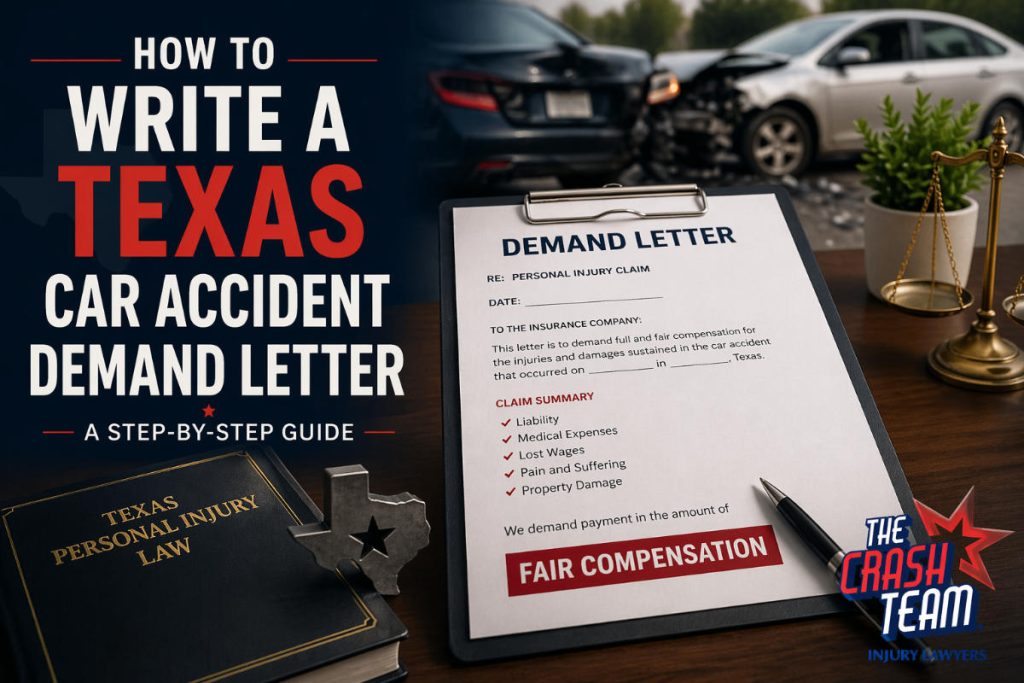
A demand letter is one of the most important steps in a Texas car accident claim. It is your opportunity to clearly present your case, outline your damages, and request fair compensation from the insurance company.
Done correctly, a demand letter can lead to a strong settlement. Done poorly, it can weaken your position before negotiations even begin. The way you present your claim at this stage often shapes how seriously it is taken moving forward.
Injured in a car accident? If you’re in Sugar Land, TX, reach out to a car accident lawyer at The Crash Team. We’ll help you with everything related to your claim, including a demand letter. Call us today at 713-300-0000 , or contact us online for a free consultation.
What Is a Car Accident Demand Letter?
A demand letter is a formal document sent to the at-fault party’s insurance company that:
- Explains how the accident happened
- Establishes liability
- Details your injuries and damages
- Requests a specific settlement amount
It sets the tone for negotiations and often determines how your claim is evaluated. In Texas, where fault directly impacts compensation under Texas Civil Practice and Remedies Code §33.001, clearly establishing liability is essential from the start.
When Should You Send a Demand Letter in Texas?
Timing plays a critical role in the effectiveness of your demand letter. Sending it too early can result in undervaluing your claim, while waiting too long can create unnecessary delays.
A demand letter should typically be sent after:
- You have completed most or all medical treatment
- Your injuries are fully understood
- Your total damages can be calculated
Texas law also imposes deadlines that indirectly affect timing. Under Texas Civil Practice and Remedies Code §16.003, you generally have two years to file a personal injury lawsuit. While a demand letter is not a lawsuit, it is part of the broader process that must stay within that timeline.
What Should Be Included in a Texas Demand Letter?
A strong demand letter includes several key components that work together to support your claim.
1. Liability Explanation
Clearly describe how the accident occurred and why the other driver is at fault. Include:
- Date, time, and location of the crash
- Key facts from the police report
- Any traffic violations or negligent behavior
Referencing applicable rules of the road, such as those found in Texas Transportation Code §545.060 (lane usage) or §545.062 (following distance), can strengthen your argument.
2. Description of Injuries
Explain your injuries in detail. Include:
- Initial diagnosis
- Symptoms and pain levels
- Treatment received
- Ongoing limitations
Accuracy matters. Avoid exaggeration, but do not downplay your condition.
3. Medical Treatment Summary
Provide a clear breakdown of your care:
- Hospital visits
- Specialist appointments
- Physical therapy
- Surgeries or procedures
Attach supporting medical records when possible to reinforce your claims.
4. Damages and Financial Losses
List all economic damages, including:
- Medical bills
- Lost wages
- Future medical expenses
- Reduced earning capacity
Organization and specificity increase credibility and make your demand more persuasive.
5. Pain and Suffering
This section explains how the accident affected your life. You might describe:
- Physical pain
- Emotional distress
- Loss of enjoyment of life
- Daily limitations
This is where your personal experience adds depth to the claim.
6. Settlement Demand
End your letter with a specific dollar amount. This figure should:
- Reflect the full value of your claim
- Leave room for negotiation
- Be supported by your documentation
Example Structure of a Demand Letter
A typical demand letter follows a clear and professional structure:
- Introduction and purpose of the letter
- Summary of the accident
- Liability explanation
- Description of injuries and treatment
- Breakdown of damages
- Settlement demand
- Deadline for response
Keeping your letter organized makes it easier for insurance adjusters to evaluate your claim and respond appropriately.
Common Mistakes to Avoid
A poorly prepared demand letter can undermine your case before negotiations even begin. Insurance companies actively look for weaknesses, and they will use them to reduce your payout.
Avoid these common mistakes:
- Sending the letter too early: Incomplete medical information leads to undervaluation
- Failing to include evidence: Missing records weaken your credibility
- Being vague about damages: Lack of detail invites lower offers
- Making unrealistic demands: Excessive amounts can stall negotiations
- Using emotional language without facts: Claims must be supported by evidence
- Leaving out liability details: Weak fault arguments reduce leverage
In Texas, where comparative fault rules apply, even small gaps in your argument can impact how responsibility is assigned and how much you recover.
How Insurance Companies Respond to Demand Letters
Once your demand letter is submitted, the insurance company will review it carefully and decide how to proceed. Their response may include:
- Accepting the demand, which is rare
- Rejecting the claim entirely
- Making a counteroffer
- Requesting additional documentation
Most cases move into a negotiation phase. During this stage, both sides exchange offers and evidence. A well-prepared demand letter gives you leverage, especially when supported by strong documentation and clear legal arguments.
Insurance companies often rely on statutes like Texas Insurance Code §541.060, which outlines unfair settlement practices, but enforcement typically requires legal action. This means you must be prepared to advocate for yourself or have representation that can do so effectively.
Do You Need a Lawyer to Write a Demand Letter?
You are not required to hire a lawyer to write a demand letter, but having one can significantly improve your outcome. Demand letters are not just summaries, they are strategic tools.
Our attorneys can and will:
- Accurately calculate the full value of your claim
- Organize and present evidence effectively
- Anticipate insurance company defenses
- Negotiate from a position of strength
Insurance companies tend to take claims more seriously when legal representation is involved. This is particularly true in complex cases involving serious injuries or disputed liability.
What Happens After the Demand Letter?
After your demand letter is submitted, the process typically unfolds in stages:
- Negotiations begin
- Additional evidence may be requested
- Settlement discussions continue
If both sides cannot reach a fair agreement, the case may proceed toward litigation. At that point, the demand letter often becomes part of the broader legal strategy, influencing how the case is presented in court.
When Should You Contact a Lawyer?
You should consider speaking with a lawyer if your case involves any level of complexity or uncertainty.
Legal guidance is especially important if:
- Your injuries are serious or long-term
- Liability is disputed
- The insurance company delays or denies your claim
- You are unsure how to calculate damages
- You receive a low settlement offer
The demand letter stage is critical. Getting it right can set the foundation for a successful claim.
How The Crash Team Builds Powerful Demand Letters
At The Crash Team, we treat every demand letter as the foundation of a strong case. Our attorneys take a detailed and strategic approach to ensure nothing is overlooked.
We:
- Conduct a thorough investigation of the accident
- Gather and organize compelling evidence
- Work with medical professionals to document injuries
- Calculate both current and future damages
- Draft clear and persuasive demand packages
- Prepare every case for negotiation or trial
We do not rely on generic templates. Each demand letter is tailored to the specific facts of your case, with the goal of maximizing your recovery.
Let The Crash Team Help You Build a Demand Letter That Maximizes Your Compensation
A demand letter is more than a formality; it is your first real opportunity to secure fair compensation. The strength of that letter can influence every stage of your claim, from negotiations to potential litigation.
At The Crash Team, we combine legal experience with a client-first approach to build demand letters that get results. We handle cases on a contingency basis, which means you pay nothing unless we win.
If you have been injured in a car accident and want to ensure your claim is presented the right way, contact The Crash Team today for a free consultation and take the next step toward recovery.
