
The Crash Team | April 15, 2026 | Car Accidents
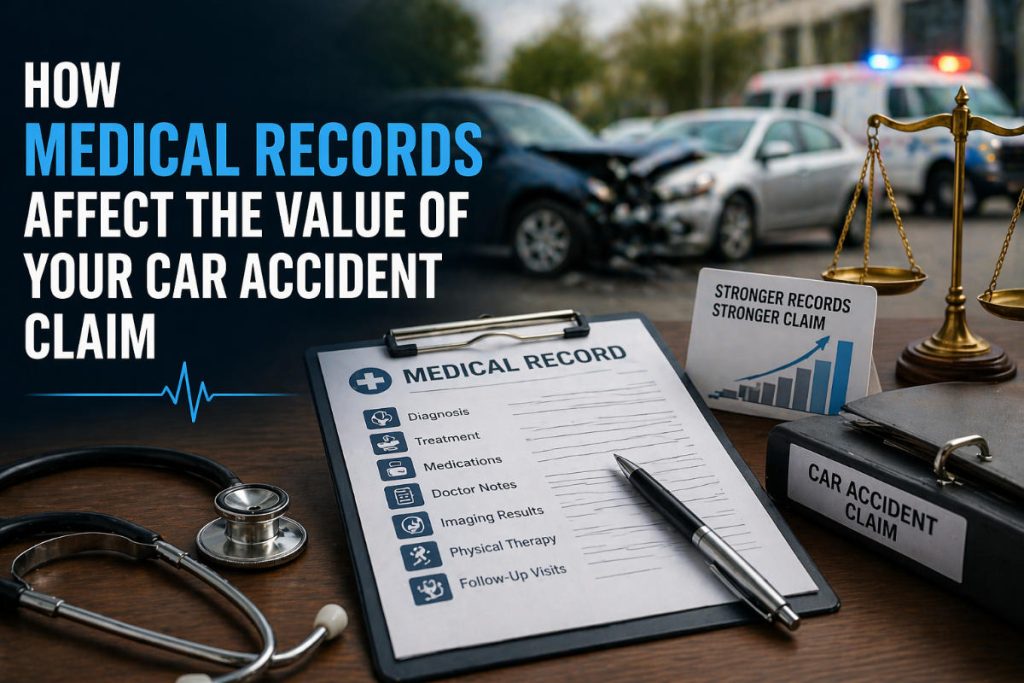
If you’ve been injured in a car accident, your medical records are one of the most important pieces of evidence in your case. They do not just document your injuries, they play a central role in determining how much your claim is worth.
Insurance companies rely heavily on medical documentation to evaluate claims. They use these records to decide whether to pay, how much to pay, and how to challenge your case. If your records are incomplete, inconsistent, or delayed, your compensation can drop significantly.
The car accident attorneys at The Crash Team are standing by. Call us 24/7 at 713-300-0000 for a free case review.
Why Medical Records Are Critical to Your Case
Under Texas Civil Practice and Remedies Code §33.001, fault and damages are closely examined after a car crash, and weak medical evidence can reduce your recovery. Thus, medical records serve as the foundation of your injury claim. Without them, your case becomes largely speculative, which gives insurance companies room to deny or minimize your claim.
They help prove several essential elements:
- You were actually injured
- Your injuries were caused by the accident
- The severity of your condition
- The treatment you required
- Your long-term prognosis
Without strong documentation, insurers often argue that your injuries are exaggerated or unrelated. This becomes especially important in Texas, where liability and damages must be clearly supported to recover compensation under Texas Civil Practice and Remedies Code §16.003, which governs the time limits for filing injury claims.
What Types of Medical Records Matter Most?
Not all medical records carry the same weight. Some documents provide stronger, more direct evidence of your injuries and their connection to the accident.
The most important records include:
- Emergency room records
- Ambulance reports
- Physician notes
- Diagnostic imaging, such as X-rays, MRIs, and CT scans
- Specialist evaluations
- Physical therapy records
- Surgical reports
- Prescription history
Together, these records create a timeline that connects the accident directly to your injuries. The more complete and consistent that timeline is, the harder it becomes for insurers to dispute your claim. All of these are part of the most important set of documents you’ll need after a Texas car accident.
How Gaps in Treatment Can Hurt Your Claim
One of the most common mistakes injury victims make is delaying or interrupting medical care. Even short gaps can raise red flags for insurance companies.
They often use these gaps to argue:
- Your injuries were not serious
- You recovered quickly
- Something else caused your condition
For example, if you wait two weeks after a crash to see a doctor, the insurer may claim your injuries were not related to the accident. This argument can significantly reduce your settlement value.
Consistency matters. Following your prescribed treatment plan shows that your injuries are real and ongoing, which strengthens your position during negotiations.
Why Timing of Treatment Is So Important
The timing of your medical care can have a direct impact on your claim. Seeking treatment immediately after an accident creates a clear and credible link between the crash and your injuries.
Prompt care helps:
- Establish causation between the accident and your condition
- Prevent insurers from disputing when your injuries occurred
- Strengthen your credibility as a claimant
Delays, on the other hand, introduce doubt. Insurance companies often take advantage of that uncertainty, especially in cases where fault is disputed under Texas law. In the at-fault system governed by Texas Transportation Code §601.072, proving both liability and damages is essential to recovering compensation.
How Medical Records Influence Settlement Value
Medical records play a central role in how your claim is valued. They provide the evidence needed to calculate both economic and non-economic damages.
They help determine:
- The total cost of your medical care
- The severity and duration of your injuries
- Whether you will need future treatment
- How your injuries affect your daily life
More detailed and well-organized records typically lead to higher settlement offers. Insurance companies rely on documentation to justify payouts, so gaps or inconsistencies can result in lower compensation.
In serious cases, such as traumatic brain injuries or multi-vehicle accidents, thorough medical documentation can mean the difference between a modest settlement and a substantial recovery.
The Role of Medical Records in Pain and Suffering
Pain and suffering damages are not tied to a specific bill or invoice, which makes them more difficult to quantify. However, your medical records provide critical support for these claims.
Doctors’ notes often include:
- Descriptions of your pain levels
- Physical limitations
- Emotional distress
- Impact on daily activities
These details help demonstrate how the accident has affected your life beyond financial losses. The more specific and consistent these notes are, the stronger your claim for non-economic damages becomes.
Without this documentation, insurers may argue that your pain is minimal or temporary, which can significantly reduce your compensation.
What If You Have Pre-Existing Conditions?
Having a pre-existing condition does not automatically prevent you from recovering compensation, but it does make your case more complex. Insurance companies often focus on prior injuries to avoid paying full value.
They may argue:
- Your injuries existed before the accident
- The crash did not worsen your condition
However, Texas law allows you to recover damages if an accident aggravated or worsened a pre-existing condition. The key is clear medical documentation that distinguishes your condition before and after the crash.
Strong records from your treating physicians can show how the accident impacted your health, making it more difficult for insurers to deny responsibility.
Common Mistakes That Damage Medical Evidence
Certain actions can weaken your medical evidence and reduce the value of your claim. These mistakes are more common than many people realize.
Avoid the following:
- Skipping doctor appointments
- Ignoring treatment recommendations
- Failing to follow up with specialists
- Not reporting all symptoms
- Downplaying pain or limitations
- Posting inconsistent information on social media
Insurance companies compare your medical records with your statements and behavior. Any inconsistency can be used to challenge your credibility and reduce your payout.
How Insurance Companies Analyze Medical Records
Insurance adjusters and their medical consultants carefully review your records with one goal in mind, minimizing the amount they have to pay.
They analyze records to:
- Identify inconsistencies in your treatment history
- Challenge the necessity of certain procedures
- Question the severity of your injuries
- Look for prior similar conditions
They are not evaluating your claim to help you. Their focus is on finding ways to limit liability and reduce compensation. This is why having complete and consistent medical documentation is so important.
What You Should Do to Strengthen Your Medical Evidence
Taking the right steps after an accident can significantly improve the strength of your medical evidence and your overall claim.
To protect your case:
- Seek medical care immediately after the accident
- Be honest and detailed about your symptoms
- Follow all treatment plans
- Keep records of every appointment
- Track how your injuries affect your daily life
- Save bills, prescriptions, and reports
These actions help create a clear and consistent narrative, which is critical when negotiating with insurance companies or presenting your case in court.
When Should You Contact a Lawyer?
You should consider speaking with an attorney as soon as possible, especially if your injuries are serious or your claim becomes complicated.
Legal guidance is particularly important if:
- Your injuries are ongoing or severe
- The insurance company is questioning your treatment
- You have pre-existing conditions
- Your claim has been delayed or denied
- You are unsure how to document your injuries properly
Early legal support can help you avoid mistakes that could reduce the value of your claim and ensure your rights are protected from the beginning.
How The Crash Team Uses Medical Evidence to Maximize Claims
At The Crash Team, we understand that strong medical evidence is the backbone of a successful injury claim. Our attorneys take a proactive approach to building your case from the ground up.
We:
- Work with your doctors to fully document your injuries
- Coordinate with specialists when needed
- Analyze medical records to build a compelling case
- Challenge insurance company medical reviews
- Ensure future medical needs are included in your claim
We do not let insurers misinterpret your medical history. Instead, we take control of the narrative and present a clear, evidence-based case that reflects the true impact of your injuries.
Let The Crash Team Turn Strong Medical Evidence Into Maximum Compensation for You
Your medical records can make or break your car accident claim, but knowing how to use them effectively is not always straightforward. Gaps in treatment, unclear documentation, or insurer pushback can quickly reduce what your case is truly worth. That is where having the right legal team matters.
At The Crash Team, we build cases around clear, compelling medical evidence and fight to ensure every detail is accounted for. We work on a contingency basis, which means you pay nothing unless we win your case.
If you have been injured and want to understand the real value of your claim, contact The Crash Team today for a free consultation. We are available 24/7 at 713-300-0000. Let us help you move forward with confidence.
