
The Crash Team | June 14, 2026 | Personal Injury
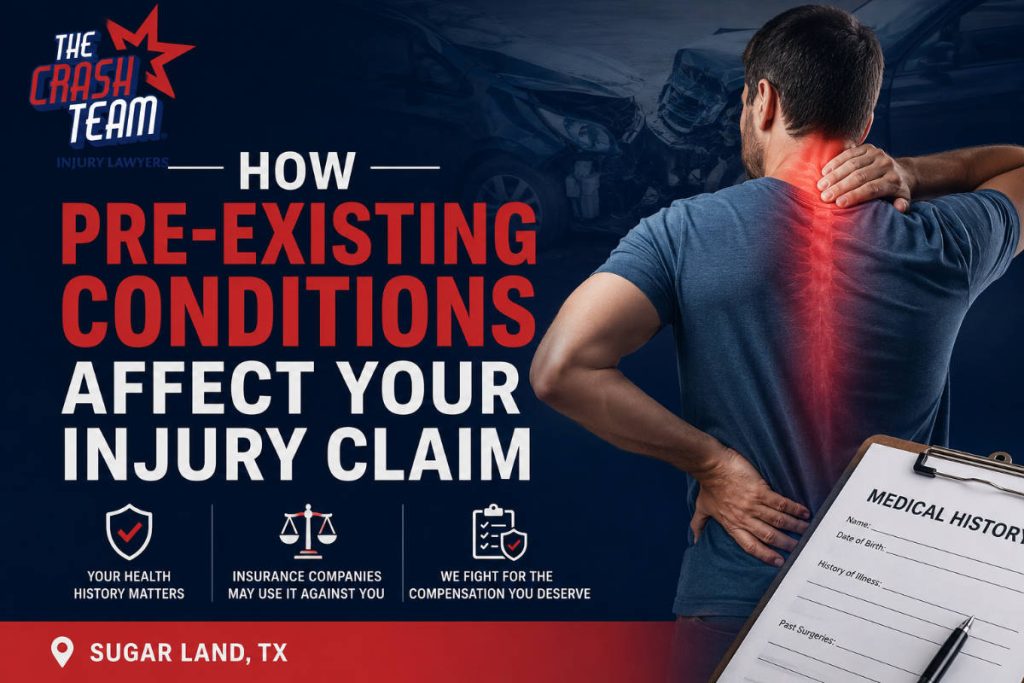
If you have been injured in a car accident but already had a prior injury or medical condition, you may be wondering:
Will this hurt my case?
The short answer is… not necessarily.
In Texas, you can still recover compensation, even with a pre-existing condition. However, these cases are often more complex, and insurance companies will look for opportunities to reduce your claim.
Have you sustained an injury and have concerns that your pre-existing conditions may affect your claim? Contact a personal injury lawyer at The Crash Team today.
What Is Considered a Pre-Existing Condition?
A pre-existing condition is any injury or medical issue you had before the accident.
Common examples include:
- Prior back or neck injuries
- Herniated discs
- Arthritis or joint problems
- Previous surgeries
- Chronic pain conditions
- Old fractures or soft tissue injuries
These conditions do not disqualify your claim, but they do require careful handling.
Can You Still Recover Compensation?
Yes.
Texas law allows you to recover compensation if the accident:
- Caused a new injury, or
- Worsened, aggravated, an existing condition
This is often referred to as the “eggshell plaintiff rule.”
What this means:
The at-fault party takes you as you are, even if you were more vulnerable to injury.
If the accident made your condition worse, you can still recover damages for that aggravation.
Texas courts have long recognized this principle in personal injury cases involving aggravated pre-existing injuries.
Why Insurance Companies Focus on Pre-Existing Conditions
Insurance companies often use pre-existing conditions to reduce or deny claims.
They may argue:
- Your injuries existed before the accident
- The crash did not cause your current symptoms
- Your treatment is unrelated to the accident
- Your condition would have worsened anyway
Their goal is to avoid paying for anything they can attribute to your prior health.
How Pre-Existing Conditions Affect Claim Value
A pre-existing condition does not eliminate your claim, but it can impact how it is evaluated.
Your compensation will focus on:
- The difference between your condition before and after the accident
- The extent of aggravation caused by the crash
- Additional treatment required due to the accident
The clearer this distinction is, the stronger your case.
What Evidence Is Needed in These Cases?
Strong medical documentation is critical.
Important evidence includes:
- Medical records from before the accident
- Medical records after the accident
- Doctor opinions linking the accident to worsened symptoms
- Diagnostic imaging comparisons, before vs. after
- Treatment history and progression
This helps establish how the accident changed your condition.
Not sure what your claim is worth? Let’s find out together.
The Importance of Being Honest About Your Medical History
One of the biggest mistakes you can make is hiding a pre-existing condition.
Insurance companies will likely discover it through:
- Medical records
- Insurance history
- Background investigations
If they find inconsistencies, they may:
- Deny your claim
- Challenge your credibility
- Reduce your compensation
Honesty allows our legal team to build you a stronger, more defensible case.
How Doctors Help Prove Aggravation
Medical professionals play a key role in these cases.
They can:
- Compare your condition before and after the accident
- Explain how the crash worsened your injury
- Provide expert opinions on future care needs
- Document changes in pain, mobility, and function
Clear medical opinions can make a significant difference in your claim.
Common Challenges in Pre-Existing Injury Claims
These cases often face additional hurdles, including:
- Disputes over causation
- Insurance company medical reviews
- Claims that symptoms are unrelated
- Difficulty separating old injuries from new damage
Without strong evidence, insurers may try to deny responsibility entirely.
What You Should Do If You Have a Pre-Existing Condition
To protect your claim:
- Be upfront about your medical history
- Seek treatment immediately after the accident
- Follow all medical recommendations
- Keep detailed records of symptoms and limitations
- Avoid gaps in treatment
- Do not discuss your condition on social media
Consistency and documentation are key.
How Pre-Existing Conditions Affect Pain and Suffering
Pre-existing conditions can still support pain and suffering claims if the accident worsened your condition.
You may be compensated for:
- Increased pain levels
- Reduced mobility
- Loss of quality of life
- Emotional distress related to worsening symptoms
The focus is on how your condition changed after the accident.
Texas Civil Practice and Remedies Code § 41.001 recognizes non-economic damages, including physical pain and mental anguish, in personal injury claims.
When Should You Contact a Lawyer?
You should speak with an attorney if:
- You have a pre-existing condition
- The insurance company is denying your claim
- Your injuries have worsened after the accident
- You are being accused of exaggerating symptoms
- You receive a low settlement offer
These cases require careful strategy and strong evidence.
How The Crash Team Handles Pre-Existing Condition Cases
At The Crash Team, we know how to build strong cases, even when prior injuries are involved.
We:
- Analyze your full medical history
- Work with doctors to document aggravation
- Gather detailed before-and-after evidence
- Challenge insurance company arguments
- Present clear, compelling claims
- Fight for maximum compensation
We do not let insurers use your past against you. We focus on how the accident changed your future.
Speak With a Texas Personal Injury Attorney at The Crash Team Today
Insurance companies often try to use pre-existing conditions as an excuse to pay less, but that does not mean your injuries are not real or compensable. If a crash made your condition worse, you may still have a strong legal claim under Texas law.
The Crash Team serves clients across Texas, including Sugar Land, Houston, Pasadena, Alvin, Friendswood, Missouri City, and beyond. We handle personal injury cases on a contingency fee basis, so you pay nothing unless we successfully recover compensation on your behalf.
Call us today at 713-300-0000 for a free consultation, and let us take any concerns related to your claim off your shoulders so you can focus on recovery.
