

The Crash Team | January 14, 2026 | Car Accidents
A police report often becomes the backbone of a car accident claim in Texas. Insurance companies lean on it, opposing attorneys dissect it, and courts frequently treat it as a neutral account of what happened. When that report contains mistakes, assumptions, or incomplete facts, it can quietly undermine your ability to recover fair compensation.
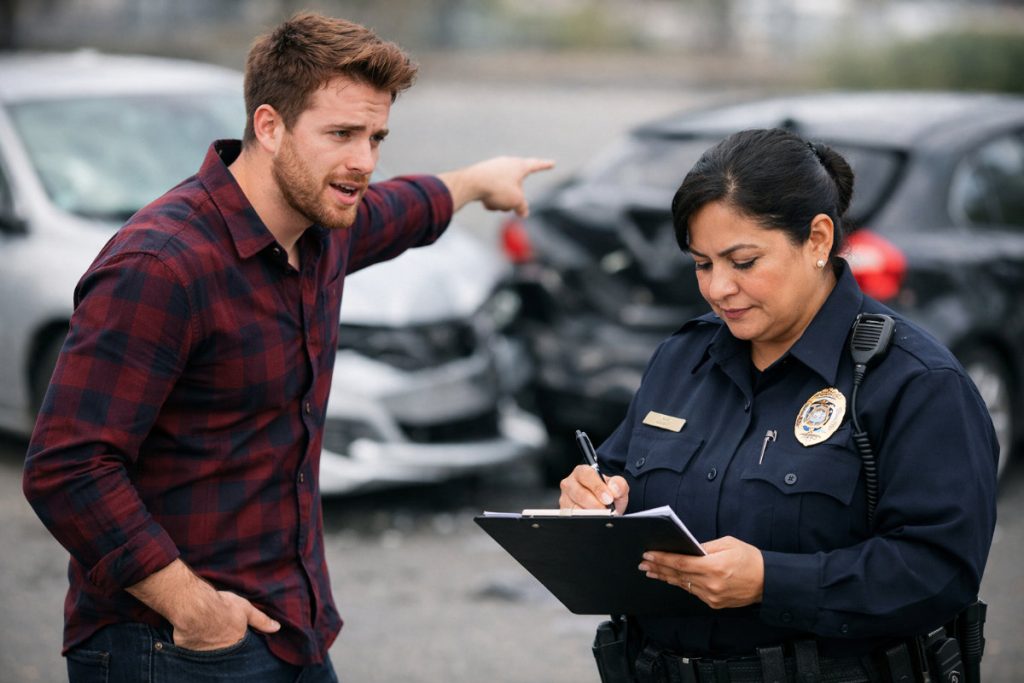
Many accident victims assume a police report is final and unchangeable. That is not entirely true. While challenging a police report is not simple, it is possible, and in certain cases, absolutely necessary. Understanding how and when to do it can make a meaningful difference in your case, especially in a state like Texas, where fault rules directly affect financial recovery.
If you’ve been in a car accident and you aren’t sure about the accuracy of the police report, or what steps to take after the accident, our Sugar Land car accident lawyers would like to hear from you. Call us today at 713-300-0000 or contact us online for a free consultation.
Why Police Reports Carry So Much Weight in Texas Accident Claims
In Texas, car accident cases operate under a modified comparative fault system. If you are found more than 50 percent responsible for a crash, you cannot recover damages. Even being partially at fault reduces your compensation proportionally. Because of this, the officer’s initial assessment of fault in a police report can shape the entire claim.
Police reports typically include observations from the scene, statements from drivers and witnesses, diagrams, and sometimes a preliminary determination of contributing factors. Insurance adjusters often treat these reports as objective, even though officers arrive after the crash and rely heavily on what they are told.
Common reasons police reports end up flawed include:
- Limited time to investigate at a chaotic scene
- Conflicting or incomplete witness statements
- Language barriers or miscommunication
- Injuries preventing a driver from fully explaining what happened
- Assumptions based on vehicle positioning rather than mechanics
In Sugar Land and throughout Texas, officers are not tasked with deciding civil liability. Their role is public safety, not building a personal injury case. That distinction matters, yet insurers often blur it to protect their bottom line.
Common Errors Found in Texas Car Accident Police Reports
Errors in police reports are more common than most people expect. Some are minor, while others have serious legal consequences. Identifying these issues early is critical, because delays can make them harder to correct or challenge.
Typical problems include incorrect vehicle information, wrong direction of travel, or misidentified points of impact. More serious issues involve fault-related conclusions or omitted details that would support your version of events.
Examples of report inaccuracies include:
- Listing the wrong driver as the primary cause of the accident
- Failing to document visible injuries or later-diagnosed conditions
- Misstating weather, lighting, or road conditions
- Leaving out witness statements that favor you
- Recording admissions you never made
These errors often create a chain reaction. An inaccurate report leads to a denied or undervalued insurance claim, which can delay medical care, wage replacement, and repairs. The longer a case drags on, the more pressure victims feel to settle for less than they deserve.
Understanding the Difference Between Amending and Challenging a Report
Not all disputes over police reports are handled the same way. In Texas, there is an important distinction between requesting an amendment and formally challenging the report’s conclusions.
An amendment typically addresses factual or clerical errors. For example, correcting a misspelled name, wrong insurance policy number, or incorrect vehicle description. These requests usually go through the law enforcement agency that created the report.
Challenging a report, on the other hand, involves disputing substantive findings, especially fault-related conclusions. Officers are rarely willing to revise these after the fact unless presented with compelling evidence.
Understanding this difference helps set realistic expectations. Amending a report is often straightforward; overturning an officer’s narrative requires strategy, documentation, and sometimes litigation. This is where experienced legal guidance becomes essential, particularly in contested injury claims.
Steps to Take When You Believe a Police Report Is Wrong
Challenging a police report in Texas follows a practical sequence. Skipping steps or acting too late can weaken your position, even if the report is clearly flawed.
A methodical approach usually includes:
- Obtaining a copy of the crash report as soon as it becomes available
- Reviewing every section carefully, including diagrams and codes
- Gathering supporting evidence such as photos, videos, and medical records
- Identifying witnesses who can clarify disputed facts
- Preparing a written statement explaining inaccuracies
In some cases, a supplemental statement can be attached to the report. While this does not change the officer’s original conclusions, it ensures your version becomes part of the official record. Insurance companies and courts may later review both.
Texas law does not impose a strict deadline for disputing a police report, but waiting is risky. Memories fade, evidence disappears, and insurers solidify their positions quickly. Acting early creates leverage and preserves options.
How Evidence Can Undermine an Inaccurate Police Report
Evidence is the most effective way to counter a flawed police report. Objective proof often speaks louder than an officer’s initial impressions, especially when those impressions were formed under time pressure.
Strong evidence may include:
- Dashcam or traffic camera footage
- Surveillance video from nearby businesses
- Event data recorder information from vehicles
- Expert accident reconstruction analysis
- Medical records showing injury timelines
For example, a police report might suggest a low-impact collision, implying minor injuries. Medical imaging and physician testimony can demonstrate otherwise, directly contradicting that assumption. Similarly, skid mark analysis or vehicle damage patterns can disprove fault determinations based solely on final vehicle positions.
This is where a settlement versus trial comparison becomes relevant. Insurance companies may concede when evidence weakens a police report during negotiations. If they refuse, the same evidence can be presented in court, where a jury decides credibility, not the police report alone.
The Role of an Attorney in Challenging a Texas Police Report
While individuals can raise concerns on their own, attorneys play a critical role in effectively challenging police reports. Legal professionals understand how insurers interpret reports and how courts weigh them against other evidence.
An experienced lawyer can:
- Conduct an independent investigation
- Coordinate expert analysis
- Communicate directly with insurers and opposing counsel
- Frame report inaccuracies within the Texas negligence law
- Prepare the case for litigation if necessary
At The CrashTeam, this process is treated as part of a broader strategy, not an isolated task. Attorneys Aaron Galvan and Breanne Galvan focus on how a flawed report affects the entire claim, from liability to damages. Their litigation experience matters when insurers rely too heavily on a questionable report, assuming victims will not push back.
When Challenging a Police Report Becomes Essential
Not every inaccurate police report needs to be challenged. Minor clerical mistakes rarely change case outcomes. However, when a report assigns fault incorrectly or omits key facts, addressing it becomes essential.
Situations that demand action include multi-car crashes, freeway pileups, and accidents involving serious injuries or fatalities. These cases often involve complex dynamics, and early mistakes can snowball into major legal obstacles.
In catastrophic injury or wrongful death cases, the stakes are especially high. A single line in a police report can influence settlement value, trial strategy, and even whether a claim proceeds at all. Understanding cause and effect in these scenarios helps explain why early legal intervention often leads to better outcomes.
Challenging an Inaccurate Police Report With The Crash Team on Your Side
If an inaccurate police report is standing between you and fair compensation, you do not have to face it alone. The Crash Team helps accident victims in Sugar Land and across Texas challenge flawed reports as part of a comprehensive personal injury strategy. Whether the issue involves disputed fault, missing evidence, or misleading conclusions, their team knows how to respond effectively.
Insurance companies move fast, and they rarely point out errors that benefit them. Taking action early can prevent unnecessary delays and financial strain. With a client-first approach and a proven track record, The Crash Team is prepared to investigate, advocate, and litigate when needed.
If you are unsure how a police report is affecting your case, or what to do after a car accident, a conversation can bring clarity. Contact us today or call us at 713-300-0000 so we may be the step that protects your rights and strengthens your path forward.
