The Crash Team | February 7, 2026 | Car Accidents
Car accidents happen fast, but the story of what happened can get complicated almost immediately. Drivers may disagree, memories can blur, and insurance companies often look for any detail they can use to reduce what they pay. That is why witness statements matter. A neutral third-party account can help confirm the truth, especially when the other driver changes their version of events later. Knowing how to collect witness statements the right way can protect your claim and your future. It is not about “building a case” like a TV drama; it is about preserving facts while they are still fresh and before anyone has time to rewrite the narrative.
If you were injured in a Sugar Land car accident, reach out to a car accident attorney at the Crash Team today. We are available 24/7 at 713-300-0000 or contact us online to schedule a free consultation.
Why Witness Statements Matter More Than You Think in Texas
In a perfect world, the police report and vehicle damage would be enough. In reality, insurance adjusters rarely settle claims based on “what seems obvious.” They want proof. Witness statements can provide that proof by filling in the gaps that photos and crash reports sometimes miss, such as whether someone was speeding, distracted, or ran a red light.
Texas also uses a modified comparative negligence rule (often called proportionate responsibility). If an insurer can pin enough blame on you, they can reduce your compensation. If they argue you were more than 50% responsible, they may try to block recovery entirely. This is one of the biggest reasons witness statements are powerful; they can help prevent the blame from being shifted onto you.
A credible witness can also strengthen the value of your case. When the liability picture is clear, your attorney can negotiate from a position of strength. When liability is “murky,” the insurance company often stalls, lowballs, or refuses to take the claim seriously.
What to Do at the Scene: The Right Way to Identify Witnesses
The best witness statements start at the crash scene, not days later. People leave quickly, and once they are gone, it can be hard to track them down. If you are physically able, and it is safe, start identifying witnesses immediately after calling 911 and checking for injuries.
Witnesses are not always the people standing closest to you. Sometimes the best witnesses are the ones you would not think of right away, such as a driver stopped behind you or a pedestrian waiting at a crosswalk. Look around and think about who had the best view of the collision.
Here are common types of witnesses worth speaking with:
- Drivers stopped at the same light or intersection
- Passengers in nearby vehicles
- Pedestrians, joggers, or cyclists
- Employees outside a store, gas station, or restaurant
- Nearby homeowners (especially in neighborhood crashes)
- Delivery drivers or rideshare drivers in the area
One practical tip: do not assume the police will collect witness information for you. Officers are often dealing with multiple tasks at once, and some crash reports list no witnesses even when several were present.
How to Ask for a Witness Statement Without Making It Awkward
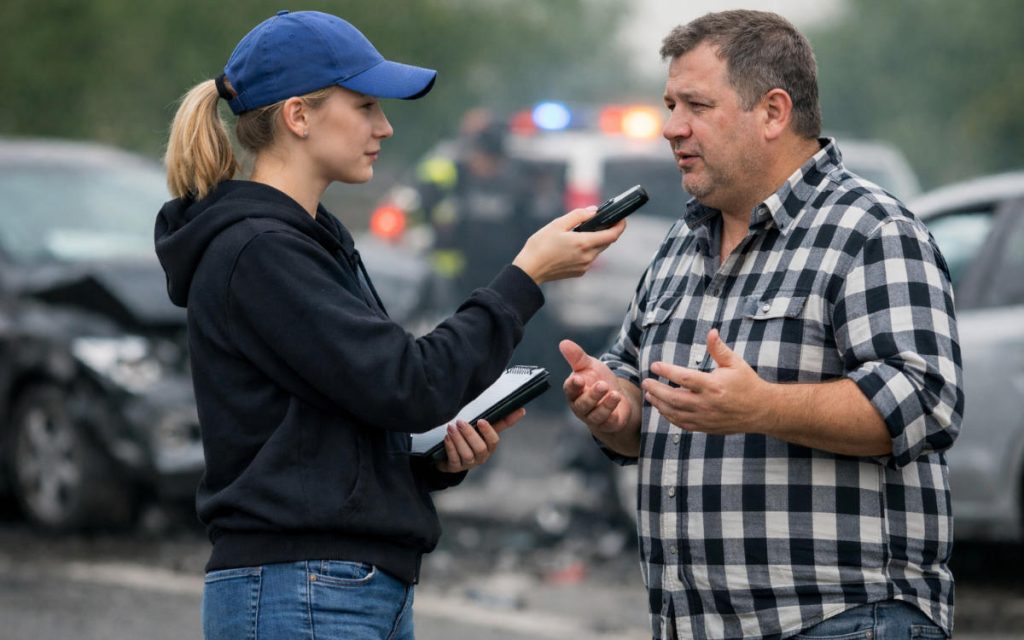
Most people want to help, but they do not want to get dragged into a legal mess. Your job is to make it easy and comfortable for them. Keep it simple, polite, and quick. You are not cross-examining them; you are just preserving what they saw.
Start with something like: “Hi, I’m sorry to bother you. Did you see what happened? Would you be willing to share what you saw and your contact info in case the insurance company asks later?”
If they agree, do not pressure them to speak longer than they want. Many witnesses will be more comfortable giving basic information at the scene and then speaking with your attorney later.
If you want to take a short statement on your phone, ask permission first. Texas is a one-party consent state for recordings, but it is still smart to be transparent. A witness who feels respected is more likely to stay cooperative later.
A few things you should avoid doing:
- Do not ask them to “take your side”
- Do not suggest what they should say
- Do not argue about fault in front of them
- Do not talk about injuries in a dramatic way (keep it factual)
Witness credibility matters. A calm, respectful interaction makes it more likely their statement will be taken seriously.
What Information to Collect (and How to Document It Correctly)
A witness statement does not have to be long to be useful. In fact, short and clear is often better. The goal is to lock in key facts: what they saw, where they were standing, and what happened first.
At a minimum, try to collect:
- Full name
- Phone number and email
- Where they were located during the crash
- What direction each vehicle was traveling
- What they saw happen (in their own words)
- Whether they noticed speeding, tailgating, or distracted driving
- Whether they heard anything (tires screeching, horn, impact)
If possible, ask them to send a text message or email summary to you right there. Even a simple message like, “I saw the black SUV run the red light and hit the silver sedan,” can be extremely valuable later.
Also, take a quick photo of their driver’s license if they consent. People sometimes accidentally give the wrong number or email, and later they cannot be located.
Finally, note the time and location in your phone. Small details help your attorney tie the witness statement to the police report, traffic camera data, or scene photos.
How Witness Statements Fit Into the Legal Process (Settlement vs. Trial)
Witness statements are not just for court. In many cases, they do their most important work long before a lawsuit is ever filed. They shape how the insurance company evaluates your claim and how strongly the other side fights.
Here is what the process often looks like in a Texas injury case:
First, there is the consultation and investigation phase. Your attorney gathers evidence, including witness contact info, crash photos, police reports, medical records, and any available video footage. Witnesses may be contacted again for a formal recorded statement.
Next comes negotiation. If the other driver’s insurance company sees clear liability backed by credible witnesses, they are more likely to offer a fair settlement. If they believe liability is disputed, they often delay, deny, or offer a low settlement.
If negotiations fail, litigation may be necessary. Witness statements can then evolve into sworn affidavits, depositions, or live testimony. The closer you get to trial, the more valuable consistent witness testimony becomes.
A simple comparison helps:
Settlement is usually faster and less stressful; trial is sometimes necessary when the insurance company refuses to be reasonable. Strong witness statements can push a case toward settlement because they reduce uncertainty.
Witness Statements Can Also Negatively Impact Your Claim
This part surprises many people. Witness statements are not automatically “good” for you. They are evidence, and evidence can cut both ways.
For example, a witness might honestly say they saw you speeding slightly, even if the other driver caused the crash. Or they may say you “looked like you were on your phone,” even if you were not. Even a vague statement like that can create doubt and give the insurance company room to argue comparative fault.
Witnesses can also be wrong. People misjudge distances, confuse vehicle colors, or assume what happened based on sound rather than sight. A well-meaning witness might unintentionally provide inaccurate details, which the defense can use to attack your case.
Here are a few real-world examples of how witness statements can hurt:
- A witness claims you “rolled through” a stop sign
- Someone says your brake lights did not come on
- A bystander says the light was “yellow,” not red
- A passenger in the other driver’s car pretends to be neutral
- A witness exaggerates how fast you were going
- Someone claims you were “walking fine” after the crash (used to downplay injuries)
This is why it matters how witness statements are collected and handled. A skilled attorney knows how to evaluate credibility, compare statements against physical evidence, and prevent weak witness testimony from damaging the claim.
When You Cannot Get Witness Statements: Other Ways to Prove What Happened
Not every crash has witnesses, and sometimes witnesses disappear before you can speak to them. That does not mean your case is doomed. It just means you need to build the story using other evidence sources.
In Sugar Land and throughout Texas, many accidents happen near businesses, intersections, or neighborhoods where surveillance footage may exist. Dashcam video is also becoming more common, and some vehicles store crash-related data.
Other helpful evidence may include:
- Traffic camera footage (when available)
- Store or gas station security video
- Dashcam footage from nearby vehicles
- Vehicle “black box” data (event data recorders)
- Photos of vehicle damage and skid marks
- Cell phone records in distracted driving cases
- 911 call recordings and dispatch logs
A natural digression that matters here: timing is everything. Video footage is often overwritten within days. If you wait too long, the most valuable evidence may disappear. This is one reason experienced injury firms move quickly after a crash; they know how fast evidence evaporates.
Even if you have no witnesses, you can still have a strong claim, especially when the physical evidence supports your version of events.
How to Protect Witness Credibility (and Avoid Common Mistakes)
Once you have witness information, your next job is to protect it. That means not doing anything that makes the witness look biased, coached, or unreliable.
Avoid posting about the crash on social media. It is not just about you; it is about the entire case. If a witness sees your posts and starts commenting, it can create a messy paper trail that the insurance company may later exploit.
Also, do not repeatedly contact witnesses yourself once you hire an attorney. That is not because you did anything wrong; it is because your attorney can communicate in a more structured, professional way and preserve testimony properly.
A few credibility killers to avoid:
- Asking a witness to “change” their wording
- Sending long texts about what you “need them to say”
- Getting emotional or angry when they remember something differently
- Allowing multiple people to “compare stories” together
- Waiting weeks before your attorney speaks with them
The best witness testimony is consistent, natural, and supported by other evidence. If a witness sounds rehearsed, the defense will attack it aggressively.
Injured in a Motor Vehicle Accident? Contact the Crash Team Today!
After a serious accident, you should not have to chase down witnesses, worry about what to ask, or wonder whether a statement will help or hurt your claim. That is real legal work, and it can make the difference between a fair settlement and a frustrating denial. The Crash Team has the experience to investigate quickly, lock in testimony, and build a case that insurance companies cannot casually dismiss.
Led by attorneys Aaron Galvan and Breanne Galvan, The Crash Team is known across Texas for client-first representation and serious litigation experience. If you were injured in a Texas car accident, truck crash, rideshare collision, or multi-car pileup, we can step in fast, secure the witness evidence, and fight for the compensation you deserve.
If you are unsure what to do after a car accident, call The Crash Team today at 713-300-0000 or contact us online for a free consultation. The sooner your case is protected, the harder it is for the other side to rewrite what happened.
