
The Crash Team | February 23, 2026 | Truck Accidents
Truck accidents in Texas often trigger an immediate assumption that the driver is solely responsible. In reality, commercial trucking is a layered operation involving multiple parties, each with specific duties. One frequently overlooked contributor is the cargo loader. When freight is improperly loaded, secured, or balanced, the results can be catastrophic for drivers, passengers, and pedestrians sharing the road.
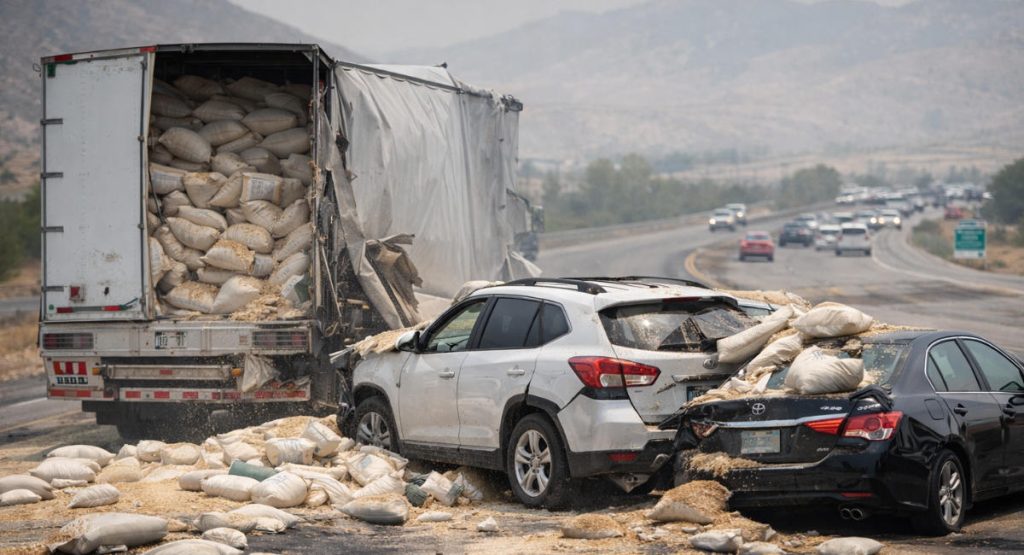
Understanding cargo loader liability matters because it can dramatically affect who is held financially responsible after a truck crash. For injured victims in Sugar Land and across Texas, identifying all liable parties is often the difference between a limited recovery and full, fair compensation. Cargo loading errors are not rare, and when they cause accidents, Texas law provides avenues to hold the right parties accountable.
Have you sustained an injury after an accident involving a truck or a truck’s improperly loaded cargo in Sugar Land, TX? Reach out to a Sugar Land truck accident lawyer today. Call The Crash Team at 24/7 at 713-300-0000 or contact us online for a free consultation.
Why Cargo Loading Matters in Commercial Truck Safety
Cargo loading is not a minor logistical step; it is a safety-critical process governed by industry standards and federal regulations. Improperly loaded cargo can shift during transport, altering the truck’s center of gravity and making it difficult or impossible for the driver to maintain control. Even a skilled driver may be unable to prevent a rollover or jackknife when cargo moves unexpectedly.
In Texas, highways frequently carry fully loaded 18-wheelers traveling at high speeds. A load that exceeds weight limits, is unevenly distributed, or is inadequately secured creates risks that multiply with every mile. Cargo loaders, whether independent contractors or employees of shipping companies, are expected to follow strict protocols.
Common cargo-related hazards include:
- Unbalanced loads that cause rollovers on curves or exit ramps
- Loose freight that spills onto roadways
- Overloaded trailers that increase braking distance
- Improperly secured hazardous materials
When these failures lead to a crash, liability may extend far beyond the cab of the truck.
Who Can Be Held Liable for Cargo Loading Errors
Determining liability in a Texas truck accident requires a close look at who handled the cargo and under what authority. Cargo loaders are often third parties separate from the trucking company and driver. This separation is significant because it opens additional paths to compensation for injured victims.
Potentially liable parties may include:
- Cargo loading companies contracted to prepare freight
- Warehouse operators responsible for loading and securing goods
- Shipping companies that set unrealistic loading timelines
- Freight brokers who coordinate transport without proper oversight
Texas law allows injured parties to pursue claims against all negligent actors whose conduct contributed to the crash. In many cases, multiple defendants share responsibility. This shared liability can increase the total insurance coverage available, which is particularly important in cases involving catastrophic injuries or wrongful death.
Federal and Texas Laws Governing Cargo Loading
Cargo loading practices are regulated primarily by the Federal Motor Carrier Safety Regulations (FMCSRs), which apply across Texas. These rules set clear standards for weight limits, load securement, and inspection responsibilities. Violations of these regulations often serve as strong evidence of negligence.
Texas also applies its own negligence laws and follows a modified comparative fault system. Under this rule, an injured party can recover damages as long as they are not more than 50 percent responsible for the accident. Identifying cargo loader negligence can significantly reduce the fault attributed to drivers or victims.
Relevant legal standards often involve:
- FMCSR load securement requirements
- Texas Transportation Code provisions on vehicle safety
- Industry-specific loading guidelines
- Contractual obligations between shippers and carriers
When cargo loaders ignore these rules, the legal consequences can extend to substantial financial liability.
How Cargo Loader Negligence Leads to Serious Accidents
Cargo loader negligence usually shows up in predictable patterns. Rushed loading schedules, inadequate training, and poor supervision all contribute to mistakes that become dangerous once a truck enters traffic. These failures often remain hidden until an accident exposes them.
Examples of negligent conduct include failing to use proper tie-downs, ignoring weight distribution charts, or loading incompatible materials together. In one common scenario, a truck may appear stable at low speeds but become uncontrollable during sudden braking or lane changes.
The effects of cargo loader negligence often include:
- Rollovers on highways and rural roads
- Multi-car pileups caused by spilled cargo
- Increased severity of impact due to excess weight
- Secondary crashes involving other motorists
These outcomes frequently result in traumatic brain injuries, spinal damage, or fatal injuries, making thorough liability investigations essential.
Investigating Cargo Loader Liability Step by Step
Truck accident cases involving cargo issues require detailed and timely investigations. Evidence can disappear quickly as cargo is redistributed or vehicles are repaired. Acting early is critical.
A typical legal process includes:
- Initial consultation to identify potential cargo issues
- Preservation of evidence through spoliation letters
- Review of loading records, bills of lading, and weight tickets
- Analysis of FMCSR compliance and inspection logs
- Expert evaluation of load securement and accident dynamics
This process often reveals discrepancies between what should have happened and what actually occurred. Experienced attorneys coordinate with accident reconstruction experts and industry specialists to build a clear narrative of fault.
Cargo Loader Liability vs. Driver Liability
One of the most important distinctions in truck accident cases is the difference between cargo loader liability and driver liability. While drivers are responsible for inspecting their loads, they are not always in control of how cargo is initially loaded. Texas courts recognize this division of responsibility.
A simple comparison helps clarify the issue. Driver liability often focuses on conduct such as speeding or fatigue. Cargo loader liability centers on preparation errors that make safe driving impossible. In contested cases, insurance companies frequently attempt to shift blame entirely onto the driver to limit exposure.
Understanding this distinction allows injured victims to pursue more comprehensive claims. It also strengthens negotiating leverage, particularly when multiple insurers are involved and a trial becomes a realistic option.
Why These Cases Are Often Contested
Cargo loader liability cases are rarely straightforward. Defendants often dispute who had final authority over the load or whether the defect was obvious to the driver. These disputes can delay settlements and push cases toward litigation.
Contested cases typically involve extensive discovery, including depositions of warehouse staff, safety managers, and corporate representatives. While this process takes time, it often uncovers systemic safety failures rather than isolated mistakes. Those findings can significantly increase case value.
Settlement versus trial decisions depend on evidence strength, injury severity, and the willingness of defendants to accept responsibility. When liability is clear, settlements may resolve efficiently. When it is contested, trial preparation becomes the key to securing fair compensation.
Hold Negligent Cargo Loaders Accountable With The Crash Team
Truck accidents caused by cargo loading failures demand a legal team that understands both the law and the logistics behind commercial transport. The Crash Team focuses on identifying every negligent party involved, including cargo loaders whose mistakes put you at risk. By building cases grounded in evidence, regulation, and experience, the firm helps clients avoid incomplete recoveries.
Led by attorneys Aaron Galvan and Breanne Galvan, The Crash Team combines serious litigation experience with a client-first approach. From investigation through negotiation or trial, the goal is accountability and meaningful compensation for you and your family.
If you were injured in a Sugar Land 18-wheeler accident or any other truck accident, and suspect cargo issues played a role, do not leave answers unexplored. Contact The Crash Team today for a free consultation and take the next step toward protecting your rights and your future.
