
The Crash Team | June 18, 2026 | Car Accidents
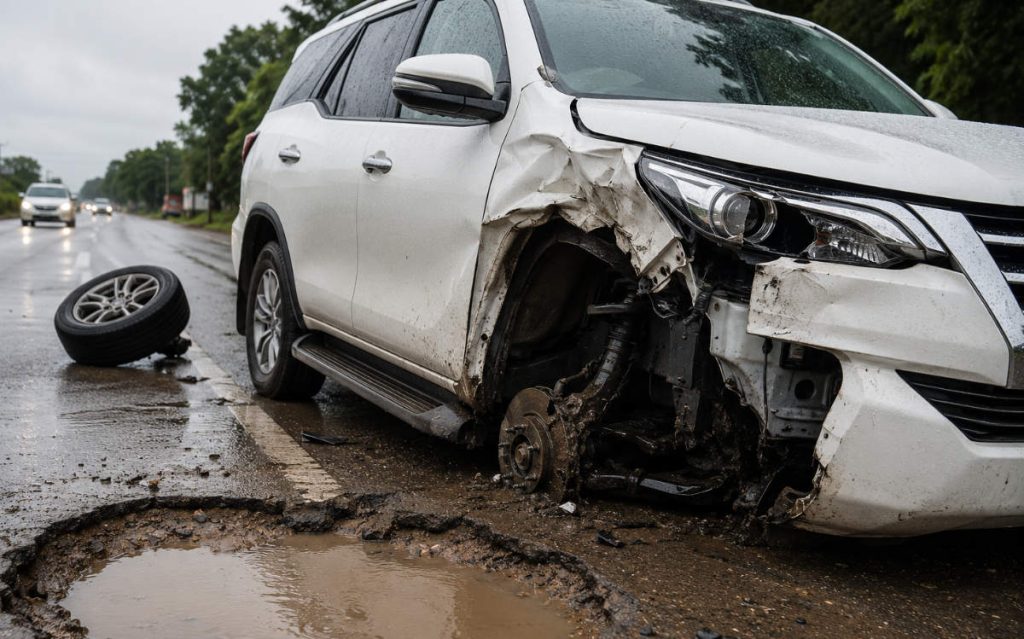
Not every accident is caused by a careless driver.
In some cases, dangerous road conditions, like potholes, poor design, or missing signs, are the real cause of a crash.
If you were injured due to a defective road in Texas, you may be wondering:
Who is responsible, and can I sue?
The answer is yes, but these cases are more complex than standard car accident claims.
Injured in a crash caused by a defective road? Reach out to a Texas car accident lawyer at The Crash Team. Call us 24/7 at 713-300-0000 or use our contact form to schedule a free consultation.
What Is Considered a Defective Road?
A defective or dangerous roadway is any condition that creates an unreasonable risk to drivers, motorcyclists, or pedestrians.
Common examples include:
- Large potholes or uneven pavement
- Poor road design or unsafe curves
- Missing or obscured traffic signs
- Malfunctioning traffic signals
- Inadequate lighting
- Lack of guardrails or barriers
- Dangerous construction zones
- Poor drainage causing flooding or slick roads
If these conditions contribute to an accident, liability may extend beyond drivers.
Who Can Be Held Liable for a Defective Road Accident?
Several parties may be responsible depending on the situation.
Government Entities
In many cases, responsibility falls on a government agency, such as:
- City governments, local streets
- County authorities
- The Texas Department of Transportation (TxDOT)
These entities are responsible for maintaining safe road conditions.
Contractors and Construction Companies
If the defect is related to roadwork, liability may fall on:
- Construction companies
- Contractors responsible for repairs or maintenance
Third Parties
In some cases, other parties may contribute, such as:
- Utility companies
- Property owners, if hazards extend into roadways
Can You Sue the Government in Texas?
Yes, but there are special rules.
Claims against government entities are governed by the Texas Tort Claims Act under Texas Civil Practice and Remedies Code Chapter 101, which limits when and how you can sue.
To bring a claim, you generally must show:
- The government knew, or should have known, about the dangerous condition
- They failed to fix it or warn the public
- The defect caused your accident and injuries
Important Deadlines for Government Claims
Claims involving government entities have strict notice requirements.
In many cases, you must:
- Notify the appropriate agency within as little as 6 months of the accident
Missing this deadline can prevent you from recovering compensation.
Texas Civil Practice and Remedies Code § 101.101 outlines notice requirements for claims against governmental units.
What Evidence Is Needed to Prove a Defective Road Claim?
These cases require strong, detailed evidence.
Key evidence may include:
- Photos and videos of the road condition
- Maintenance and inspection records
- Prior complaints or incident reports
- Witness statements
- Accident reconstruction analysis
- Expert testimony on road design or safety
Proving the condition existed, and was dangerous, is critical.
Not sure what your claim is worth? Let’s find out together.
What If Another Driver Was Also Involved?
In many cases, liability may be shared.
For example:
- A defective road contributed to the accident
- Another driver’s negligence also played a role
Texas follows modified comparative fault rules, meaning multiple parties can share responsibility.
You may be able to pursue claims against:
- The at-fault driver
- The government entity
- Any other responsible parties
What Compensation Can You Recover?
If your claim is successful, you may be entitled to compensation for:
- Medical expenses
- Future medical care
- Lost wages
- Reduced earning capacity
- Pain and suffering
- Property damage
However, claims against government entities may have damage caps depending on the circumstances.
Why Defective Road Cases Are More Difficult
These cases are more complex than standard accident claims because:
- Government entities have legal protections
- Strict deadlines apply
- Proving notice of the defect is required
- Evidence can be difficult to obtain
- Multiple parties may be involved
Insurance companies and government agencies often defend these claims aggressively.
What You Should Do After an Accident Caused by Road Conditions
To protect your claim:
- Seek medical attention immediately
- Document the road condition with photos or video
- Note the exact location of the hazard
- Gather witness information
- Report the issue to local authorities
- Avoid speaking with insurers without guidance
The condition may be repaired quickly, so documenting it early is critical.
When Should You Contact a Lawyer?
You should speak with an attorney immediately if:
- You believe a road defect caused your accident
- A government entity may be involved
- Your injuries are serious
- Liability is unclear
- You are unsure about deadlines or legal requirements
These cases require fast action and careful handling.
How The Crash Team Handles Defective Road Claims
At The Crash Team, we know how to take on complex cases involving dangerous road conditions.
We:
- Investigate the cause of the accident in detail
- Identify all responsible parties
- Secure critical evidence before it disappears
- Handle claims against government entities
- Work with experts in road design and safety
- Build cases designed for maximum compensation
We do not stop at the obvious. We uncover every source of liability.
Contact a Car Accident Attorney at The Crash Team Today
Dangerous road conditions can lead to devastating accidents, and determining liability is often more complicated than it first appears. Whether your crash involved poor road maintenance, missing signage, or unsafe construction zones, taking action quickly can help preserve valuable evidence.
Our car accident attorneys at The Crash Team handle defective road accident cases on a contingency fee basis, meaning you owe no legal fees unless we recover compensation for your injuries.
We serve clients across Texas through our office in Sugar Land. Call us 24/7 at 713-300-0000 for a free consultation.
