

The Crash Team | March 11, 2026 | Car Accidents
Distracted driving is not a minor traffic issue in Texas. It is one of the leading causes of car accidents across the state, affecting drivers in large metropolitan areas like Houston as well as growing communities such as Sugar Land. A momentary glance at a phone, a GPS adjustment, or even eating behind the wheel can turn an ordinary commute into a life-altering collision.
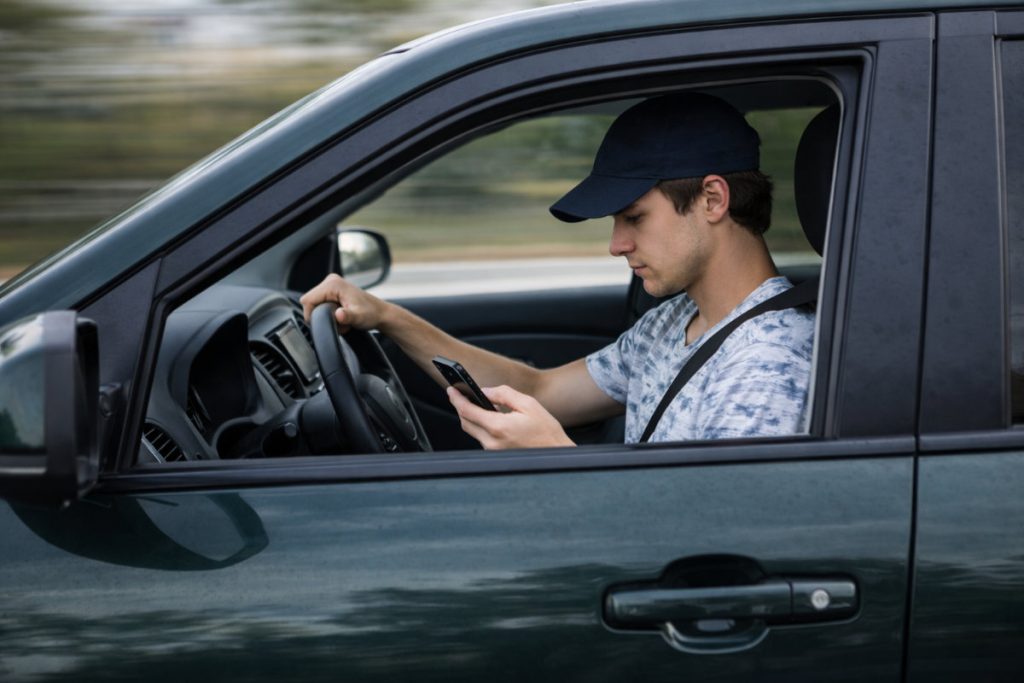
Texas lawmakers have responded with a set of regulations aimed at reducing driver distraction and improving roadway safety. However, the laws can be confusing. Different rules apply depending on the driver’s age, the type of distraction involved, and even the city where the violation occurs. Understanding Texas’s distracted driving laws is important for both avoiding penalties and protecting your legal rights after a crash.
Have you sustained injuries in an accident due to a distracted driver? Reach out to a car accident attorney at The Crash Team. Give us a call at 713-300-0000 or contact us online for a free consultation. We’re available 24/7.
Texas Distracted Driving Statistics: Why the Laws Matter
Distracted driving is more than an inconvenience or a traffic ticket. It is a major contributor to serious and fatal crashes throughout Texas. According to data from the Texas Department of Transportation (TxDOT), thousands of accidents each year involve drivers who were not fully focused on the road.
Several patterns continue to appear in distracted driving crash reports:
- Drivers using mobile phones for texting or messaging
- Drivers interacting with navigation systems or apps
- Eating or drinking while operating a vehicle
- Adjusting vehicle entertainment systems
- Engaging with passengers or children in the car
In recent years, distracted driving has been linked to tens of thousands of crashes statewide. Many of these incidents result in severe injuries such as traumatic brain injuries, spinal cord damage, or fatalities. Rear-end collisions and T-bone crashes at intersections are particularly common when drivers look down at their phones.
Texas lawmakers recognized the growing risk years ago, which led to statewide legislation targeting texting while driving. Still, the statistics show that distraction remains a persistent problem. Enforcement, education, and civil liability all play a role in holding negligent drivers accountable.
For personal injury attorneys, these numbers are not abstract data points. They represent real people who suddenly face medical bills, lost wages, and long recoveries after preventable crashes.
Is It Illegal to Text and Drive in Texas?
Yes. Texas has a statewide law that prohibits texting while driving.
The 2017 Texting-While-Driving Ban, enacted under Texas Transportation Code §545.4251, made it illegal for drivers to read, write, or send electronic messages while operating a motor vehicle. The law applies across the state and was passed after years of debate about how to reduce mobile phone distractions on Texas roads.
Under the statute, drivers may not:
- Send or receive text messages
- Email while driving
- Use messaging apps to communicate
- Enter written information into a phone
The law does allow certain limited exceptions. For example, drivers can use their phone if the vehicle is stopped, if they are reporting an emergency, or if they are using hands-free navigation features.
The ban might sound straightforward, but enforcement can sometimes be complicated. Officers must typically observe the driver actively texting, which means some distracted behaviors may still go unnoticed. That is one reason civil liability after a crash often becomes important.
In accident cases, proving a driver was texting at the time of a collision can significantly strengthen an injury claim. Phone records, eyewitness testimony, and vehicle data often reveal whether the driver’s attention was on the road or on a screen.
Is It Legal to Use Your Phone in Other Ways?
Texas law does not impose a complete ban on phone use while driving. Instead, the focus of the statewide statute is on manual texting or writing electronic messages.
This means certain forms of phone use may still be permitted, depending on how the device is used.
Examples of commonly permitted phone activity include:
- Using hands-free calling features
- Operating a GPS navigation app
- Using voice commands to send messages
- Listening to music or podcasts through a connected device
However, legal permission does not necessarily eliminate liability after a crash. If a driver becomes distracted while using a navigation app or adjusting their phone, they may still be considered negligent under Texas personal injury law.
Courts often analyze distracted driving cases under a broader negligence standard. The key question becomes whether the driver acted reasonably under the circumstances. A driver who repeatedly looks down at a screen while moving through traffic may still be found responsible for an accident.
In practice, this means phone use can still play a major role in accident litigation even if the activity technically falls outside the texting ban.
Sugar Land Distracted Driving Law Is the Most Comprehensive
Local governments in Texas sometimes pass their own traffic safety ordinances. Sugar Land has taken a particularly proactive approach.
The Sugar Land distracted driving ordinance is widely considered one of the most comprehensive in Texas because it goes beyond the statewide texting ban. Rather than focusing only on texting, the city restricts most handheld phone use while driving within city limits.
Under Sugar Land’s ordinance, drivers are generally prohibited from:
- Holding a phone while operating a vehicle
- Manually dialing numbers
- Reading or composing messages
- Using handheld devices at traffic signals
Hands-free devices are still allowed, which means drivers can use Bluetooth or voice-command features.
Local enforcement efforts are aimed at reducing accidents on busy roads such as Highway 59 and other major corridors running through Fort Bend County. As Sugar Land has grown into a larger suburban hub, traffic density has increased; city officials have responded with stronger safety regulations.
For drivers, this creates an important legal reality. A behavior that may technically comply with statewide law could still violate a local ordinance. Understanding both layers of regulation can help drivers avoid citations and protect themselves in accident investigations.
Penalties for Distracted Driving in Texas: Fines, Charges, and Legal Consequences
Violating Texas distracted driving laws can lead to financial penalties and other legal consequences. The exact outcome depends on whether the violation simply involved texting or whether it contributed to an accident.
Typical penalties include:
- A fine of up to $99 for a first offense
- A fine of up to $200 for repeat offenses
- Additional penalties if a crash results in injury or death
- Possible criminal charges in severe cases
When distracted driving causes serious harm, the legal stakes increase dramatically. Prosecutors may pursue charges such as reckless driving or criminally negligent homicide, depending on the facts of the case.
Beyond criminal penalties, civil liability often becomes the most significant consequence. Injured victims can pursue compensation through a personal injury claim. These claims may seek damages for:
- Medical bills
- Rehabilitation and therapy
- Lost income
- Pain and suffering
- Property damage
Insurance companies often attempt to minimize payouts in these cases. That is where experienced injury attorneys can make a difference by building evidence and negotiating aggressively.
How Texas Proves Distracted Driving in Car Accident Cases
In civil injury cases, proving distracted driving requires evidence. Unlike a simple traffic stop, accident litigation often involves a detailed investigation.
Attorneys typically examine several types of evidence when building a distracted driving case:
- Cell phone records, showing texts or app activity around the time of the crash
- Vehicle data recorders, which may reveal braking patterns or speed
- Dashcam or traffic camera footage
- Eyewitness testimony from other drivers or passengers
- Police accident reports
The legal process usually unfolds in several stages.
First, the injured person meets with an attorney for a consultation. The attorney evaluates the facts, reviews the police report, and determines whether distracted driving may have played a role.
Next comes the investigation phase. Attorneys may request phone records through legal discovery, analyze crash reconstruction reports, and interview witnesses.
If the evidence supports liability, the case may move toward negotiation with the insurance company. Many claims settle during this stage; however, if the insurer refuses to offer fair compensation, the case can proceed to litigation and trial.
Settlement versus trial is an important decision. Settlements often resolve cases faster, while trials may result in larger awards when negligence is clear.
Injured by a Distracted Driver? The Crash Team Can Help You Hold Them Accountable!
Distracted driving laws exist to keep Texas roads safer, yet many drivers still ignore them. When a crash happens because someone was texting, using a phone, or otherwise not paying attention, the consequences can be serious. Victims often face mounting medical bills, time away from work, and uncertainty about what comes next. If you have been injured in a distracted driving accident, speaking with an experienced attorney can help you understand your legal options. The Crash Team offers a free consultation to review your case and explain the steps involved in pursuing compensation.
Contact The Crash Team today and learn how we can help you pursue the compensation and accountability you deserve.
