The Crash Team | February 27, 2026 | Truck Accidents
Truck accidents in Texas rarely involve just one mistake by one person. Behind every commercial truck on the road is a trucking company making decisions about hiring, training, scheduling, maintenance, and safety compliance. When those decisions prioritize speed or profit over public safety, the consequences can be devastating. For injured victims, understanding trucking company liability is often the key to holding the right parties accountable.
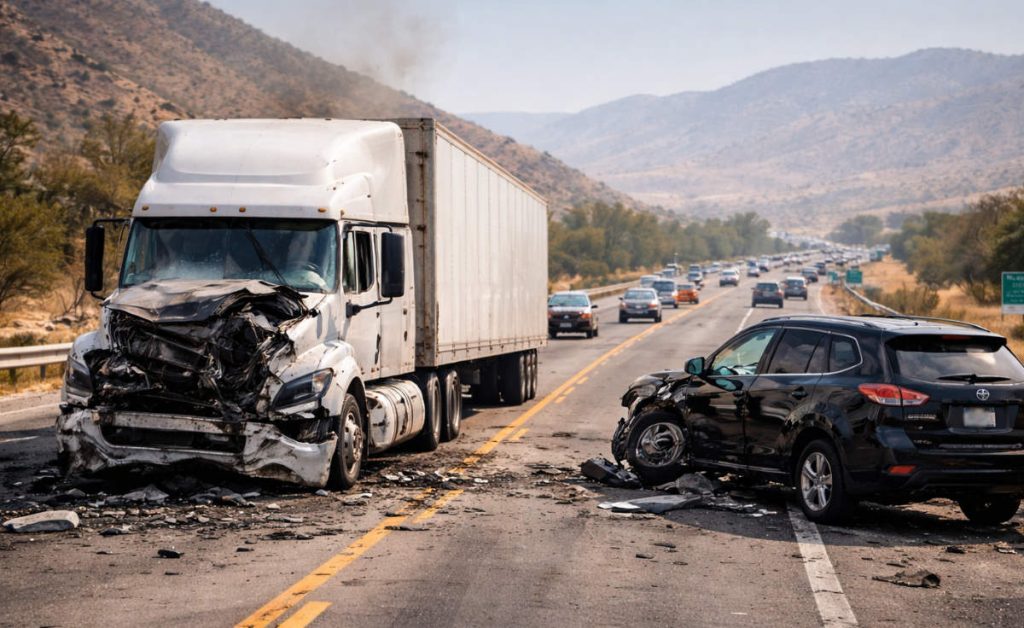
In Sugar Land and throughout Texas, truck accident claims frequently hinge on corporate conduct rather than individual driver error alone. Trucking companies are governed by a combination of federal regulations and Texas law, and violations can create clear paths to liability. Identifying these failures early can significantly affect the scope and value of a claim.
Have you been injured in an accident caused by a truck in Sugar Land, TX, and you suspect the trucking company might be at fault? Contact a truck accident lawyer at The Crash Team today. Call us at 713-300-0000 or contact us online for a free consultation.
Why Trucking Companies Are Often Liable After Crashes
Trucking companies exercise substantial control over how their drivers operate on Texas roads. This control creates legal responsibility. When a company sets unrealistic delivery schedules, ignores maintenance warnings, or fails to enforce safety rules, it can be held liable for resulting accidents.
Under Texas negligence law, liability arises when a party owes a duty of care, breaches that duty, and causes harm. Trucking companies owe a duty not only to their drivers but also to everyone sharing the roadway. That duty extends to hiring qualified drivers, maintaining vehicles, and complying with safety regulations.
Common corporate failures include poor oversight and cost-cutting measures. These decisions often stay hidden until a serious crash exposes them. When that happens, injured victims may pursue claims directly against the company, not just the driver, which can dramatically increase available compensation.
Negligent Hiring, Training, and Supervision Practices
One of the most common foundations for trucking company liability is negligent hiring or supervision. Texas law allows injured parties to hold companies accountable when they place unqualified or dangerous drivers behind the wheel of massive commercial vehicles.
Trucking companies are expected to conduct background checks, verify commercial licenses, and ensure drivers are properly trained. When these steps are skipped or rushed, risk increases. A driver with a history of reckless driving or substance abuse should never be operating an 18-wheeler on Texas highways.
Examples of negligent company practices include:
- Hiring drivers without reviewing driving records
- Failing to provide adequate safety training
- Ignoring prior accident or violation history
- Allowing unlicensed or underqualified drivers to operate trucks
These failures often surface during litigation when personnel files and internal policies are examined closely.
Hours of Service Violations and Driver Fatigue
Driver fatigue remains a leading cause of serious truck accidents. Federal Hours of Service regulations are designed to prevent exhaustion by limiting how long drivers can operate without rest. Trucking companies are responsible for enforcing these limits.
In practice, companies sometimes pressure drivers to exceed legal hours to meet delivery deadlines. When this happens, liability may shift from the driver to the company that encouraged or ignored the violation. Fatigued driving slows reaction times and impairs judgment, making accidents more likely and more severe.
Evidence of Hours of Service violations may include logbook discrepancies, electronic logging device data, and dispatch records. These records often reveal patterns of systemic noncompliance rather than isolated mistakes. In Texas courts, such evidence can strongly support claims of corporate negligence.
Poor Vehicle Maintenance and Safety Violations
Commercial trucks require constant inspection and maintenance. Brake failures, tire blowouts, and steering issues are rarely sudden or unavoidable. They are often the result of deferred maintenance or ignored inspection reports.
Trucking companies are responsible for keeping vehicles roadworthy. Federal regulations mandate routine inspections, repairs, and documentation. When companies cut corners to save money, they increase the likelihood of catastrophic mechanical failures.
Maintenance-related liability may involve:
- Worn or defective brakes
- Bald or underinflated tires
- Faulty lighting or signaling systems
- Ignored inspection reports
When a mechanical failure causes a crash, maintenance records often become central evidence. Missing or altered records can further strengthen claims against the company.
Vicarious Liability and the Scope of Employment
Texas law recognizes vicarious liability, which means a trucking company can be held responsible for a driver’s actions if the driver was acting within the scope of employment. This principle applies even if the company claims the driver was an independent contractor.
Trucking companies frequently attempt to avoid liability by labeling drivers as contractors. Courts, however, look beyond labels to examine actual control. If the company controlled routes, schedules, or operational rules, vicarious liability may still apply.
This distinction matters because company insurance policies typically carry higher coverage limits than individual driver policies. Establishing vicarious liability often opens the door to more substantial compensation, particularly in cases involving catastrophic injuries or wrongful death.
How Trucking Company Liability Cases Are Investigated
Truck accident cases involving corporate liability require aggressive and timely investigation. Evidence can be lost quickly if not preserved. Trucking companies often deploy rapid response teams immediately after a crash to protect their interests.
A structured legal approach usually includes:
- Initial consultation and case assessment
- Immediate preservation of evidence requests
- Review of driver logs, maintenance records, and policies
- Analysis of federal and Texas regulatory compliance
- Expert evaluations of accident causation
This process often reveals patterns of unsafe practices rather than isolated errors. Thorough investigations strengthen negotiating leverage and prepare cases for trial if settlement efforts fail.
Settlement vs. Trial in Trucking Company Liability Cases
Not all trucking company liability cases resolve the same way. Some settle once evidence clearly shows corporate negligence. Others proceed to trial when companies deny responsibility or dispute the extent of damages.
A simple comparison highlights the difference. Settlements offer faster resolution and certainty, while trials may take longer but allow juries to fully assess corporate misconduct. In Texas, juries often respond strongly to evidence of systemic safety violations.
The decision to settle or proceed to trial depends on liability strength, injury severity, and defendant behavior. Companies are more likely to offer fair settlements when they know a legal team is prepared to litigate aggressively.
Hold Trucking Companies Accountable With The Crash Team
Trucking companies have resources, insurers, and legal teams working to limit their exposure after serious accidents. The Crash Team levels the playing field by uncovering corporate negligence and building cases designed to withstand scrutiny. From negligent hiring to maintenance failures, no detail is overlooked.
Led by attorneys Aaron Galvan and Breanne Galvan, The Crash Team brings serious litigation experience and a client-first mindset to every truck accident case. The firm understands how trucking companies operate and how to hold them accountable under Texas law.
If you were injured in a Texas truck accident and believe a trucking company’s actions played a role, do not face the process alone. Contact The Crash Team today for a free consultation and take the next step toward protecting your rights and your recovery.
